
Jul 15

When Friends Take the Wheel

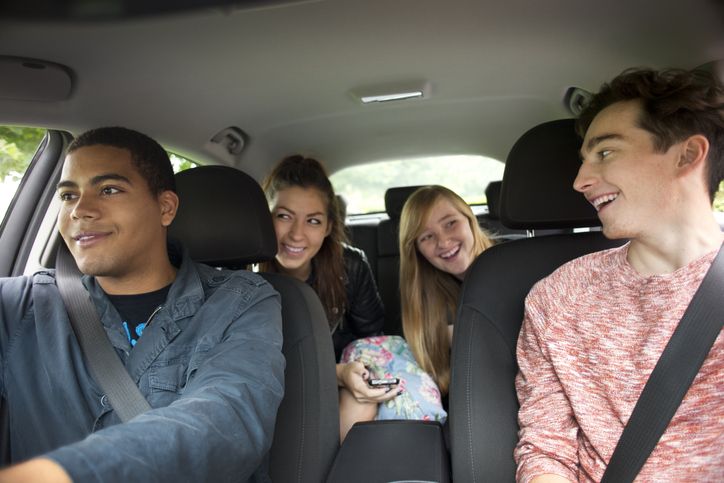
A learner passes their driving test on Friday. On Saturday evening, they're in the passenger seat of a friend's car heading out with a group of mates to have fun and enjoy youth.

Most parents would see this as a normal part of growing up. Yet for many young people, travelling as a passenger with friends can be one of the highest-risk situations they encounter on the road.

As driving instructors, we spend hours teaching learners how to manage hazards when they are behind the wheel. But there is another important road safety lesson that deserves attention: how to stay safe when someone else is driving.

The risks don't end in the driving seat

Road safety discussions often focus on newly qualified drivers, and rightly so. However, research into young driver collisions consistently highlights the role of peer influence, distraction and risk-taking behaviour within vehicles carrying groups of young people. Not all new drivers will take risks, they may make all the right decisions but still crash due to inexperience in adverse weather, at night or not reacting to danger.

For learners and newly qualified drivers, this means that being a passenger is not automatically a safe option.

A friend behind the wheel may be inexperienced. They may be carrying multiple passengers, driving at night, navigating unfamiliar roads or feeling pressure to impress others in the vehicle. In some situations, passengers may witness speeding, dangerous overtaking, mobile phone use or other risky behaviour.

The challenge is that many young people recognise unsafe driving, even the unintentional poor driving but feel uncomfortable speaking up.

They may worry about appearing critical, spoiling the mood or damaging a friendship. As a result, they remain silent even when they feel unsafe.

Teaching learners to be active passengers

One of the most valuable messages instructors and families can give learners is that road safety does not stop when they hand over the keys.

Passengers are not powerless observers. They can make decisions that significantly affect their own safety.


Learners should be encouraged to:


 Think carefully about who they travel with- write two lists with their families of which friends they do not trust to drive safely and the friends who are less reckless or more experienced.

 Avoid getting into a vehicle if the driver appears tired, distracted, angry or impaired.

 Always wear a seatbelt and demand others to do the same.

 Trust their instincts if a situation feels unsafe.

 Speak up if a driver is speeding or taking unnecessary risks. Every passenger has a right to arrive alive.

 Arrange alternative transport if they become uncomfortable during a journey.

These may sound like simple actions, but for many young people they require confidence and preparation.
Discussing these scenarios during lessons and modelling answers helps learners consider their responses before they find themselves in a real-life situation.

Giving learners permission to speak up


Many young people know what safe driving looks like because they have spent months learning it.
The challenge is feeling able to act on that knowledge when a friend is driving.

Driving instructors can help by normalising conversations about passenger responsibility.

Asking questions such as:

 What would you do if your friend started speeding?
 How would you respond if the driver picked up their phone?
 How would you ask to get out of the vehicle?
 What if the driver refuses to stop?
 What alternatives would you have if you no longer felt safe?

These discussions encourage learners to explore their options and see speaking up as a sensible safety decision rather than a social confrontation.

Bringing parents into the conversation

Parents often focus on helping their child become a safe driver. However, it is equally important to prepare them to be a safe passenger.

Encourage families to discuss situations that may arise after lessons have finished and the test has been passed.

Topics might include:

 Accepting lifts from friends
 Travelling late at night
 Recognising unsafe driving behaviour
 Having a backup plan if a journey feels unsafe
 Modelling speaking up in different scenarios
 Agreeing a "no questions asked" lift home if needed

Knowing that support is available can make it much easier for a young person to remove themselves from a risky situation.

Parents have already shown the power of collective action. Across the UK, many school communities have united around smartphone-free childhood initiatives, recognising that it is far easier to protect children when families work together rather than in isolation.

The same principle could transform road safety for newly qualified drivers. Imagine if parents within a friendship group agreed to continue providing lifts after dark, discouraged peer passengers during the first six months of independent driving and offered transport support for a little longer while young drivers gained experience.

By working together, parents could reduce risk for every young person in the group, not just their own child and potentially prevent tragedies before they occur.

A road safety lesson that lasts a lifetime

Every young person will spend far more time as a passenger than as a learner driver. By helping them and their families recognise unsafe situations, trust their judgement and feel confident enough to act, instructors can equip them with skills that may protect them long after the L-plates have come off.

Sometimes the safest decision a young person makes on the road isn't from behind the wheel.

It's deciding not to get into or stay in a car that doesn't feel safe.
Created with